
Diesel Change To Heat Pump – A Case Study
Diesel Boiler Change-Out To Heat Pump: A Case Study
When the owners of a four-bedroom, two-storey home in Merivale, Christchurch, reviewed their heating costs, it became clear that their diesel boiler was no longer the practical choice it had once been. Built in 2010, the home originally relied on diesel because it was considered the most cost-effective and efficient option available at the time. Heat pump technology was not yet able to deliver the higher water temperatures required for the home’s radiator system.
The Challenge: Rising Diesel Costs
Over time, the cost of running the diesel boiler increased significantly. A full tank of diesel, which had once cost around $300 and lasted about a month, had risen to approximately $1,200. Keeping the home warm had become increasingly expensive, prompting the customer to look for a cleaner, more sustainable alternative.
The timing was right for change. The customer was also installing solar power and wanted a heating system that could make better use of that renewable energy. Advances in heat pump technology meant there was now a suitable option capable of delivering the temperatures required for radiator heating.
The Solution: A High Temperature Heat Pump
Gavin Lowe Energy recommended a Ritter heat pump as the replacement system. The unit was selected because it can produce hot water up to 75°C, making it well suited to radiator systems that require higher operating temperatures.
As a high-capacity unit, the Ritter was a strong fit for a larger home where standard hot-water heat pumps may not provide enough output. Its R290 refrigerant and high-temperature performance also allow the system to reach the required temperatures without relying on electric backup to boost the water.
Although it was not the lowest-cost option available, the Ritter offered the right combination of performance, running-cost savings, and suitability for replacing a diesel boiler. It can also heat the hot water cylinder above 60°C, removing the need for the cylinder element to complete the weekly Legionella cycle.
The Installation: A Careful Changeover
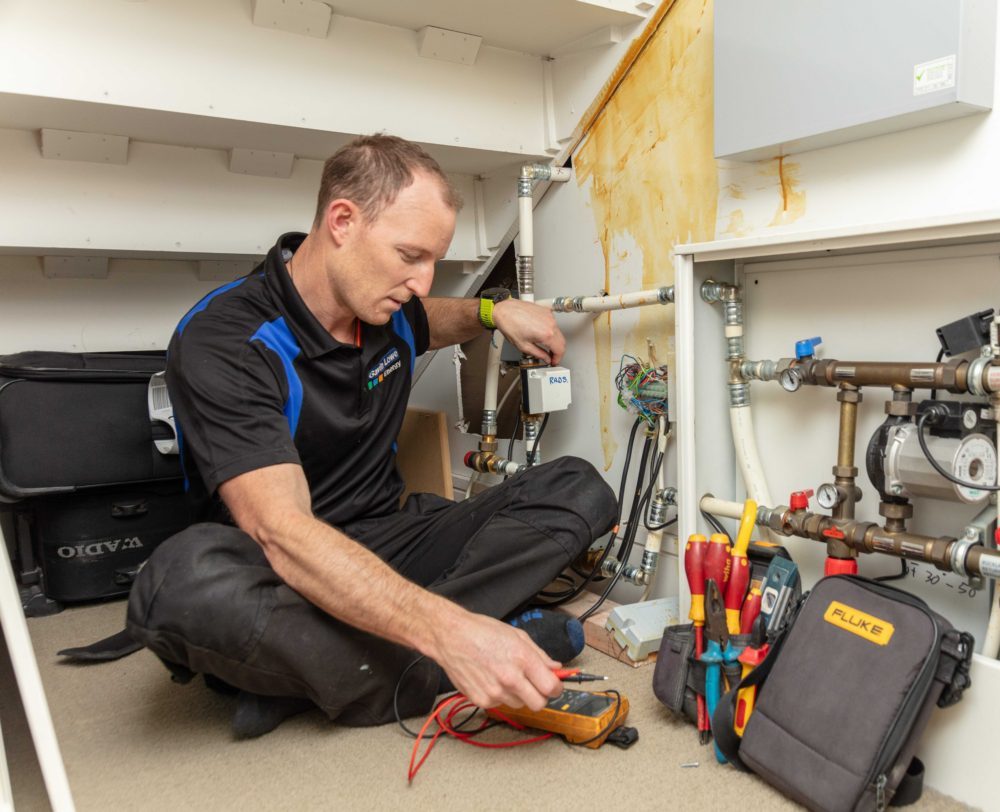
Replacing the diesel boiler required careful planning, coordination, and a staged approach. The existing system first had to be safely isolated, the diesel fuel drained, and the old boiler removed before the new heat pump could be installed.
The changeover also required the team to assess how the existing controls would integrate with the new system and plan the electrical work needed to connect the heat pump back to the switchboard.
Key installation considerations included:
- Safely isolating the diesel supply and removing the old boiler system.
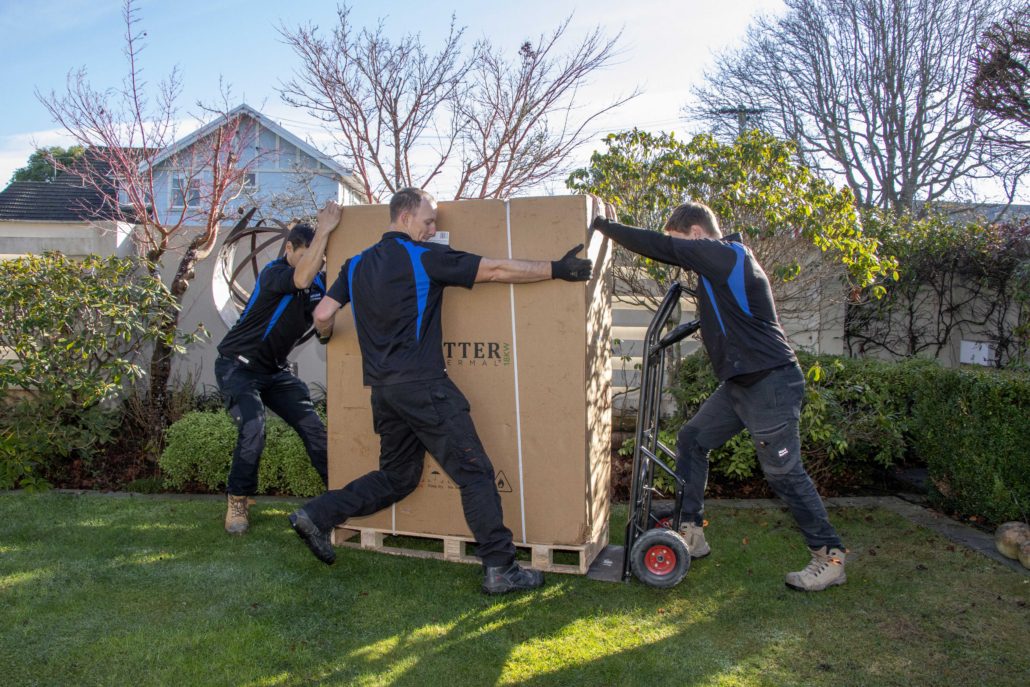
- Managing heavy equipment, including a 220 kg outdoor heat pump unit and boiler components weighing between 100 kg and 200 kg.
- Running a new power feed back to the switchboard where required.
- Integrating the existing electrical controls with the new heating system.
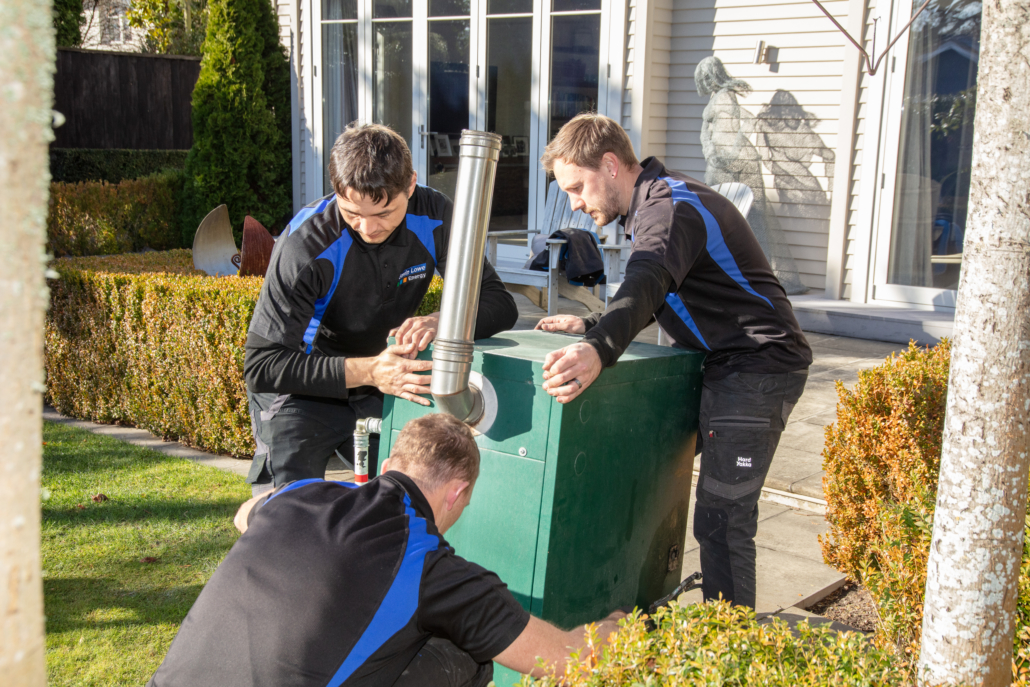
- Commissioning the new hydronic heat pump system once installed.
Installation process
Following the initial consultation, quote, and client approval, the team visited the site to confirm the materials required and develop a detailed installation plan. Once the equipment was sourced and the job scheduled, the installation team arrived on site to isolate and remove the existing boiler, complete the electrical and hydronic connections, and commission the new system.
Timeframe and expertise
A replacement of this type typically takes two to three days, depending on the complexity of the existing system. This project required both HVAC and electrical expertise, along with knowledge of hydronic heating, boiler controls, building structure, diesel isolation, and system commissioning.
Keeping disruption to a minimum
The customer generally should not lose hot water during the changeover, as the cylinder element can usually be connected temporarily and then returned to the new system once it is up and running.
The Result: Cleaner, Quieter and More Comfortable
Since the changeover, the customer has found the new heat pump system much easier to live with. Compared with the diesel boiler, which was messy to refill and required regular servicing, the heat pump is clean, tidy, quiet, and simple to manage.
The system is set to operate at 60°C, while testing confirmed it can reach 75°C when needed. Most importantly, the home remains warm and comfortable.
The financial benefits are also significant. The customer expects to save at least $800 per month. With an installation cost of $28,000 through Gavin Lowe Energy for this particular job, the estimated payback period is around three years.
For the customer, the change is about more than reducing running costs. Paired with a future solar power option, the heat pump supports their move toward renewable energy and a more sustainable way to heat their home.
The Customer Experience
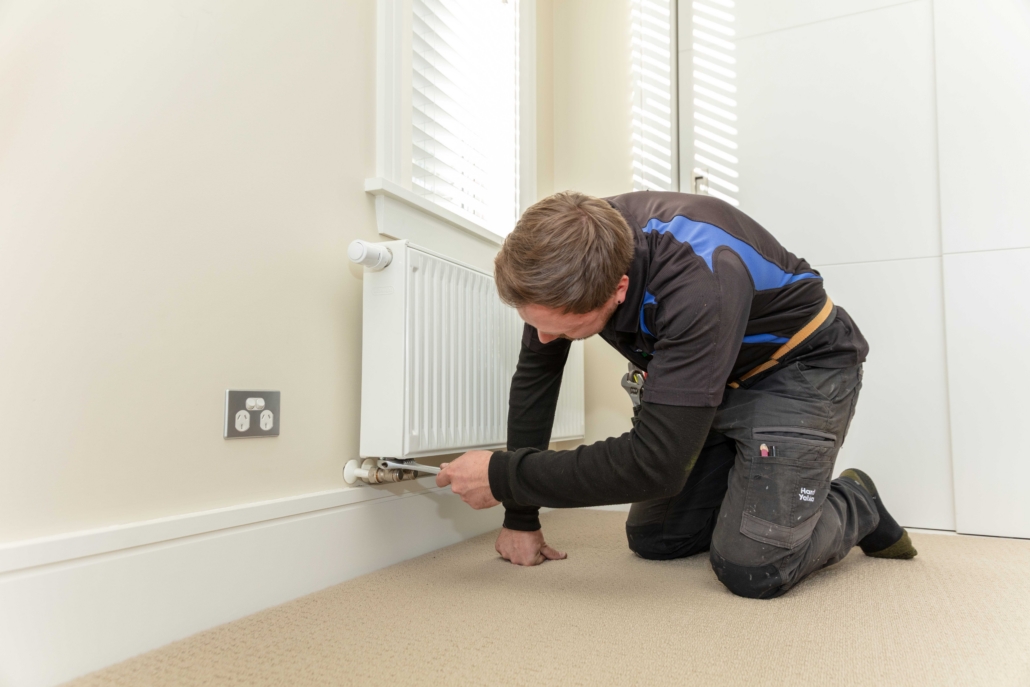
The customer described their experience with Gavin Lowe Energy as positive from the first enquiry. They found the team polite, genuinely interested, quick to respond, and professional throughout the quoting and installation process. From first inquiry to completed installation took just 6 weeks.
On site, the tradespeople were respectful of the home, removing their shoes before entering and taking away rubbish and old materials once the work was complete.
For the customer, the process felt straightforward and painless — a major change made simple.
If you are interested in replacing your diesel boiler with a heat pump, contact us now by phone (03) 337-9584 or by email to aaron@gavinlowe.co.nz
Related Articles
 https://gavinlowe.co.nz/wp-content/uploads/2026/07/Manifold-e1784516275635.jpg
812
1000
Karen Lowe
https://gavinlowe.co.nz/wp-content/uploads/2021/04/GLE-Logo-Landscape-Large.png
Karen Lowe2026-07-20 14:50:122026-07-20 14:58:11Diesel Change To Heat Pump – A Case Study
https://gavinlowe.co.nz/wp-content/uploads/2026/07/Manifold-e1784516275635.jpg
812
1000
Karen Lowe
https://gavinlowe.co.nz/wp-content/uploads/2021/04/GLE-Logo-Landscape-Large.png
Karen Lowe2026-07-20 14:50:122026-07-20 14:58:11Diesel Change To Heat Pump – A Case Study https://gavinlowe.co.nz/wp-content/uploads/2026/07/Picture1-e1784516384984.jpg
376
534
Karen Lowe
https://gavinlowe.co.nz/wp-content/uploads/2021/04/GLE-Logo-Landscape-Large.png
Karen Lowe2026-07-09 11:43:272026-07-09 11:43:27How We Recycle Refrigerants For The Environment
https://gavinlowe.co.nz/wp-content/uploads/2026/07/Picture1-e1784516384984.jpg
376
534
Karen Lowe
https://gavinlowe.co.nz/wp-content/uploads/2021/04/GLE-Logo-Landscape-Large.png
Karen Lowe2026-07-09 11:43:272026-07-09 11:43:27How We Recycle Refrigerants For The Environment https://gavinlowe.co.nz/wp-content/uploads/2026/05/SugarloafEntrance_LisaSun.jpg
5151
7722
Karen Lowe
https://gavinlowe.co.nz/wp-content/uploads/2021/04/GLE-Logo-Landscape-Large.png
Karen Lowe2026-05-06 16:01:122026-05-06 16:01:12Underfloor Hydronic Heating Put To The Test!
https://gavinlowe.co.nz/wp-content/uploads/2026/05/SugarloafEntrance_LisaSun.jpg
5151
7722
Karen Lowe
https://gavinlowe.co.nz/wp-content/uploads/2021/04/GLE-Logo-Landscape-Large.png
Karen Lowe2026-05-06 16:01:122026-05-06 16:01:12Underfloor Hydronic Heating Put To The Test! https://gavinlowe.co.nz/wp-content/uploads/2025/03/20231110_164033.jpg
910
1920
Karen Lowe
https://gavinlowe.co.nz/wp-content/uploads/2021/04/GLE-Logo-Landscape-Large.png
Karen Lowe2025-11-24 14:45:182026-02-17 09:53:13No More Diesel & Gas!
https://gavinlowe.co.nz/wp-content/uploads/2025/03/20231110_164033.jpg
910
1920
Karen Lowe
https://gavinlowe.co.nz/wp-content/uploads/2021/04/GLE-Logo-Landscape-Large.png
Karen Lowe2025-11-24 14:45:182026-02-17 09:53:13No More Diesel & Gas! https://gavinlowe.co.nz/wp-content/uploads/2025/06/HiAceVanArt-1-scaled.jpg
1068
2560
Karen Lowe
https://gavinlowe.co.nz/wp-content/uploads/2021/04/GLE-Logo-Landscape-Large.png
Karen Lowe2025-06-16 16:37:402025-07-25 06:13:33Proudly Local For 30 Years 1995 – 2025
https://gavinlowe.co.nz/wp-content/uploads/2025/06/HiAceVanArt-1-scaled.jpg
1068
2560
Karen Lowe
https://gavinlowe.co.nz/wp-content/uploads/2021/04/GLE-Logo-Landscape-Large.png
Karen Lowe2025-06-16 16:37:402025-07-25 06:13:33Proudly Local For 30 Years 1995 – 2025 https://gavinlowe.co.nz/wp-content/uploads/2024/07/Madoka-3-Resized-scaled.jpg
1706
2560
Karen Lowe
https://gavinlowe.co.nz/wp-content/uploads/2021/04/GLE-Logo-Landscape-Large.png
Karen Lowe2024-07-15 15:24:382026-02-17 09:54:19Bespoke Design – Ducted Heat Pumps
https://gavinlowe.co.nz/wp-content/uploads/2024/07/Madoka-3-Resized-scaled.jpg
1706
2560
Karen Lowe
https://gavinlowe.co.nz/wp-content/uploads/2021/04/GLE-Logo-Landscape-Large.png
Karen Lowe2024-07-15 15:24:382026-02-17 09:54:19Bespoke Design – Ducted Heat Pumps https://gavinlowe.co.nz/wp-content/uploads/2021/07/Clipboard-Crop-scaled.jpg
1397
2560
Karen Lowe
https://gavinlowe.co.nz/wp-content/uploads/2021/04/GLE-Logo-Landscape-Large.png
Karen Lowe2021-07-04 18:45:542024-01-29 14:12:18Healthy Homes Standards
https://gavinlowe.co.nz/wp-content/uploads/2021/07/Clipboard-Crop-scaled.jpg
1397
2560
Karen Lowe
https://gavinlowe.co.nz/wp-content/uploads/2021/04/GLE-Logo-Landscape-Large.png
Karen Lowe2021-07-04 18:45:542024-01-29 14:12:18Healthy Homes Standards

